Information and familiarisation for families
This website had been produced by Quest Assessments and Dover Grammar School for Girls to provide families with clear information and practical support for The Dover Test.


The Dover Test
Information and familiarisation for families
This website had been produced by Quest Assessments and Dover Grammar School for Girls to provide families with clear information and practical support for The Dover Test.
Registration closes: To be confirmed
Exam date: To be confirmed
Results day: Mid-October 2027
Secondary school application deadline: 31st October 2027
National Offer Day: 1st March 2028

Your child will sit two non-adaptive paper assessments. Each paper lasts approximately 60 minutes. All papers will be sat on the same day, and your child will have a short break between assessments.

Paper one
English and Mathematics

Paper two
Verbal Reasoning and Non-verbal Reasoning
The Dover Test assesses English, maths, verbal reasoning and non-verbal reasoning. The best preparation is a strong grounding in what your child is already learning at school, combined with wide reading and the ability to apply their knowledge to new contexts. The test is built to assess genuine understanding of the curriculum: the most valuable thing your child can do is keep learning steadily and confidently in school.
We've created a set of free resources to help your child understand what the test looks and feels like, and build confidence across all subjects ahead of exam day. These booklets provide sample questions so your child can become familiar with the question format and filling in an OMR answer sheet.
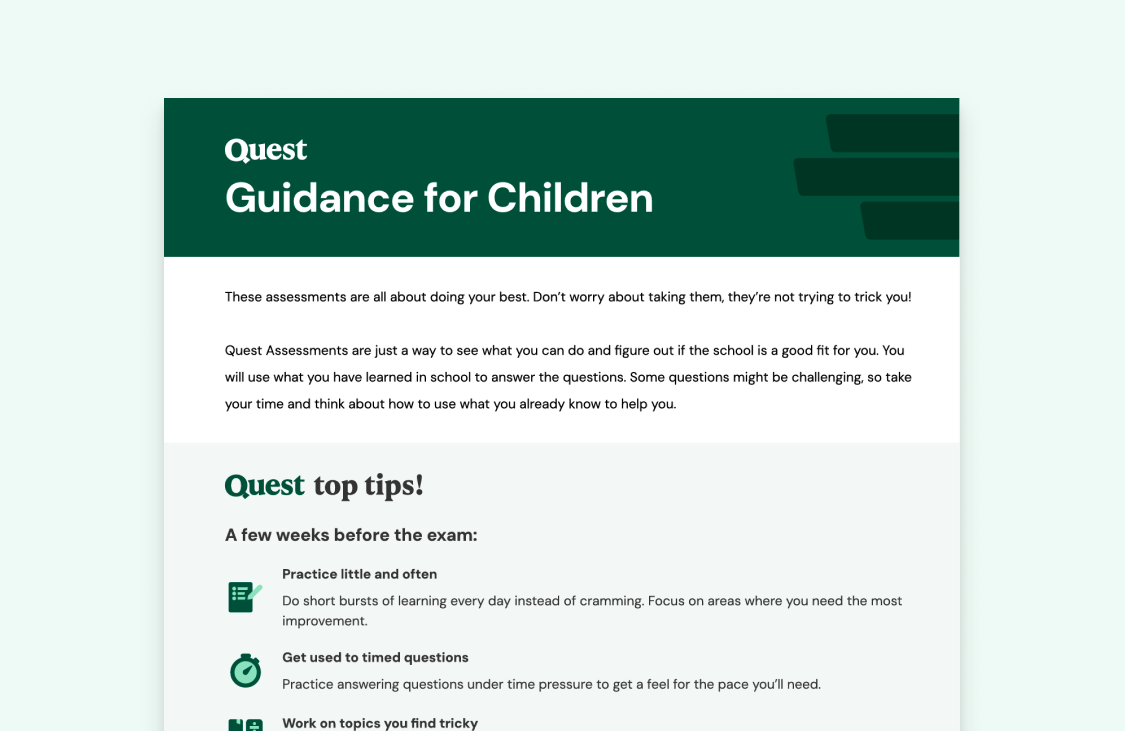
Written for children, this guide includes what the test is, how to handle nerves, what to do if they get stuck, and what to expect on the day.
DOWNLOAD
%20(1).png)

A list of words your child may find useful to know, designed to support their broader vocabulary development.
DOWNLOAD
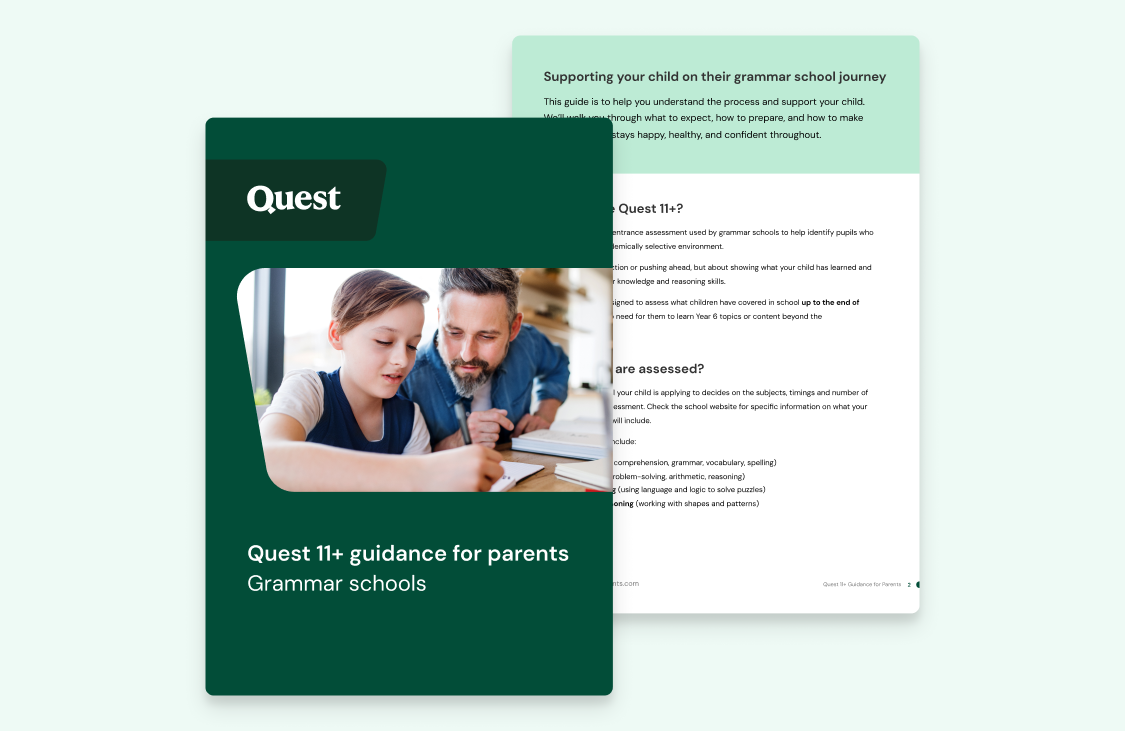
This guide is to help you understand the Quest process and support your child.
DOWNLOAD
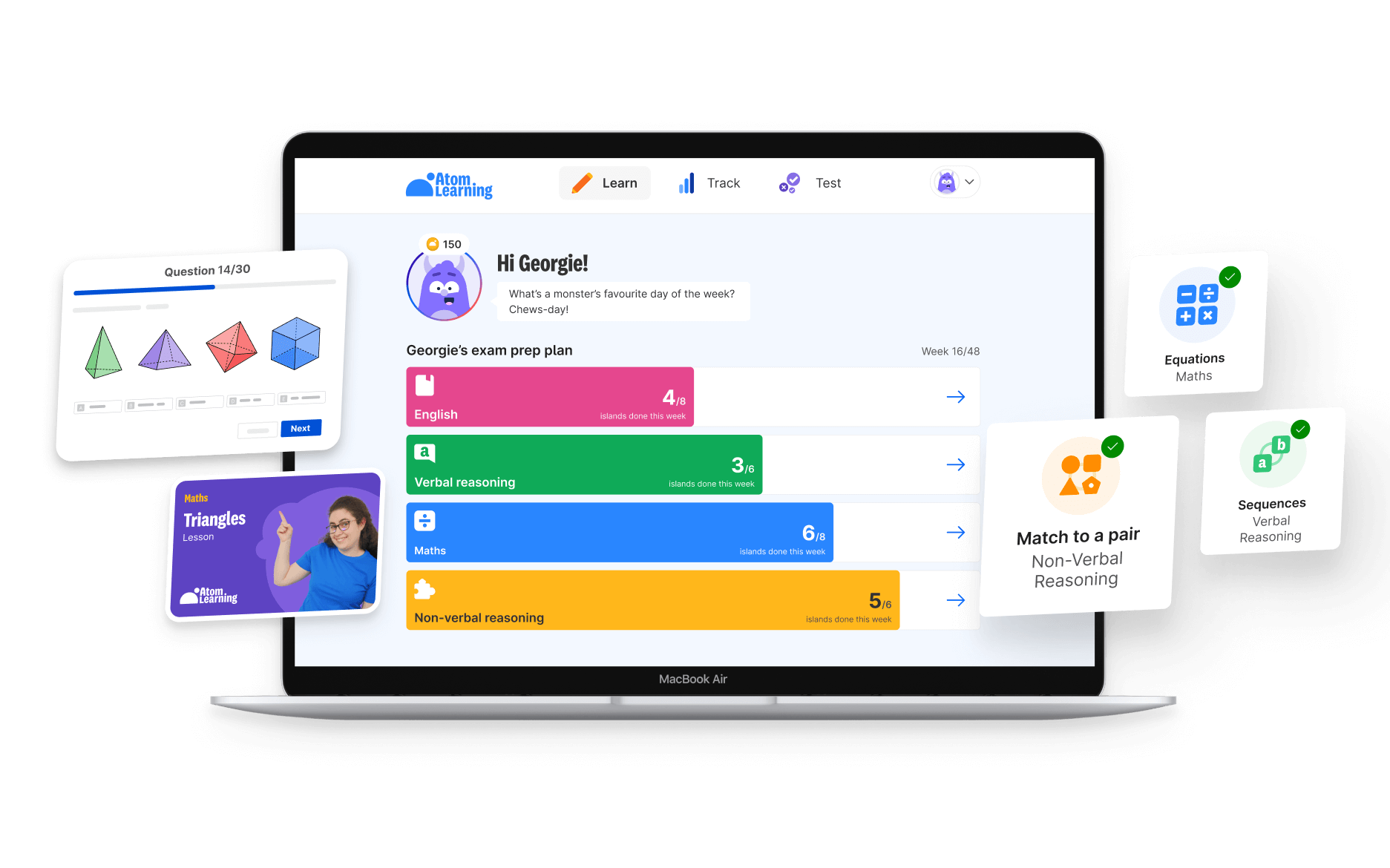
Dover Grammar School for girls and Quest have worked together to ensure every child has access to high-quality preparation materials, regardless of their family's circumstances.
Quest Assessments is part of the education company Atom Learning. With the Dover Grammar School for girls, we are offering free access to Atom Home for all pupil premium eligible candidates. Atom Home provides structured exam practice and KS2 learning across all subjects, with questions, progress tracking, and subject-specific learning paths your child can work through at home.
REQUEST ACCESS TO ATOM HOME
Your child will sit the test at Dover Grammar School for Girls.
The Dover Test consists of two assessments, both sat in the same session with a short supervised break between them. Each paper lasts approximately 60 minutes, plus time for instructions. Your child will remain in the test environment during the break.
An invigilator will read instructions before, during, and after each paper. Your child will be given a question booklet and a separate answer sheet for each subject. They may also receive a reading booklet.
If your child can't hear the instructions or has a question, they should put their hand up.

The Dover Test is a paper test. All questions are multiple choice. Your child selects from a set of options (usually five: A, B, C, D or E).
Most Quest 11+ papers use an OMR (Optical Mark Recognition) answer sheet. This means, instead of writing out answers, your child will draw a horizontal line through a box next to their chosen answer.
The familiarisation materials include a practice OMR answer sheet to help your child get comfortable with the format before test day.
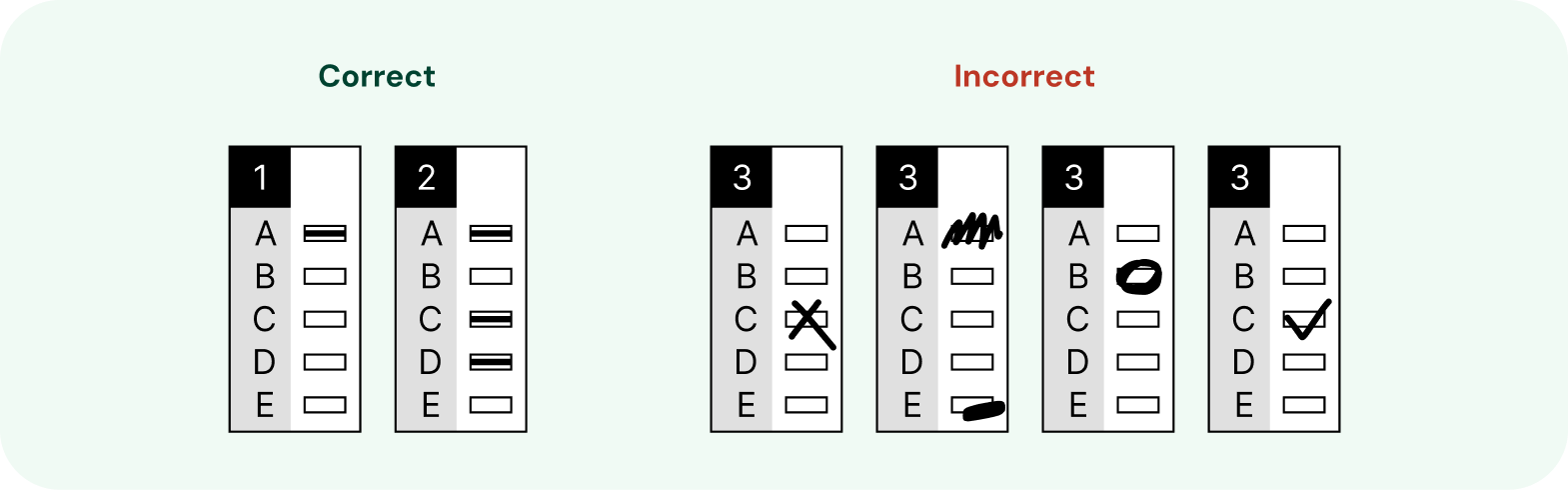

Draw a clear, solid horizontal line through the chosen box.
Mark one answer per question unless the question specifically tells you there is more than one answer.
The familiarisation booklets include a sample OMR answer sheet.
Working through a few questions, practising marking answers, rubbing out, and checking question numbers match helps your child get familiar with how to complete an OMR sheet.
They should rub it out fully with a clean eraser, then mark their new answer.
A good eraser matters as much as a good pencil!
Results will be released Mid October 2027.
There are 140 Year 7 places available.
For questions about admissions, results, or to request a review, contact Dover Grammar School for Girls at enquiries@dggs.kent.sch.uk.
The deadline for secondary school applications is 31 October 2027.
Still have questions?
Please note that Quest Assessments is not able to respond to individual enquiries from parents or carers. All queries about the Dover Test (including questions about registration, results, venues, and special arrangements) should be directed to the school.
Dover Grammar School for Girls
The Quest Assessments Team
questassessments.com