Designed to complement your observations, our assessments offer clear, child-centred insights that support every unique child’s growth.

Help every early years pupil flourish
Designed to complement your observations, our assessments offer clear, child-centred insights that support every unique child’s growth.


.png)



%20(1).png)
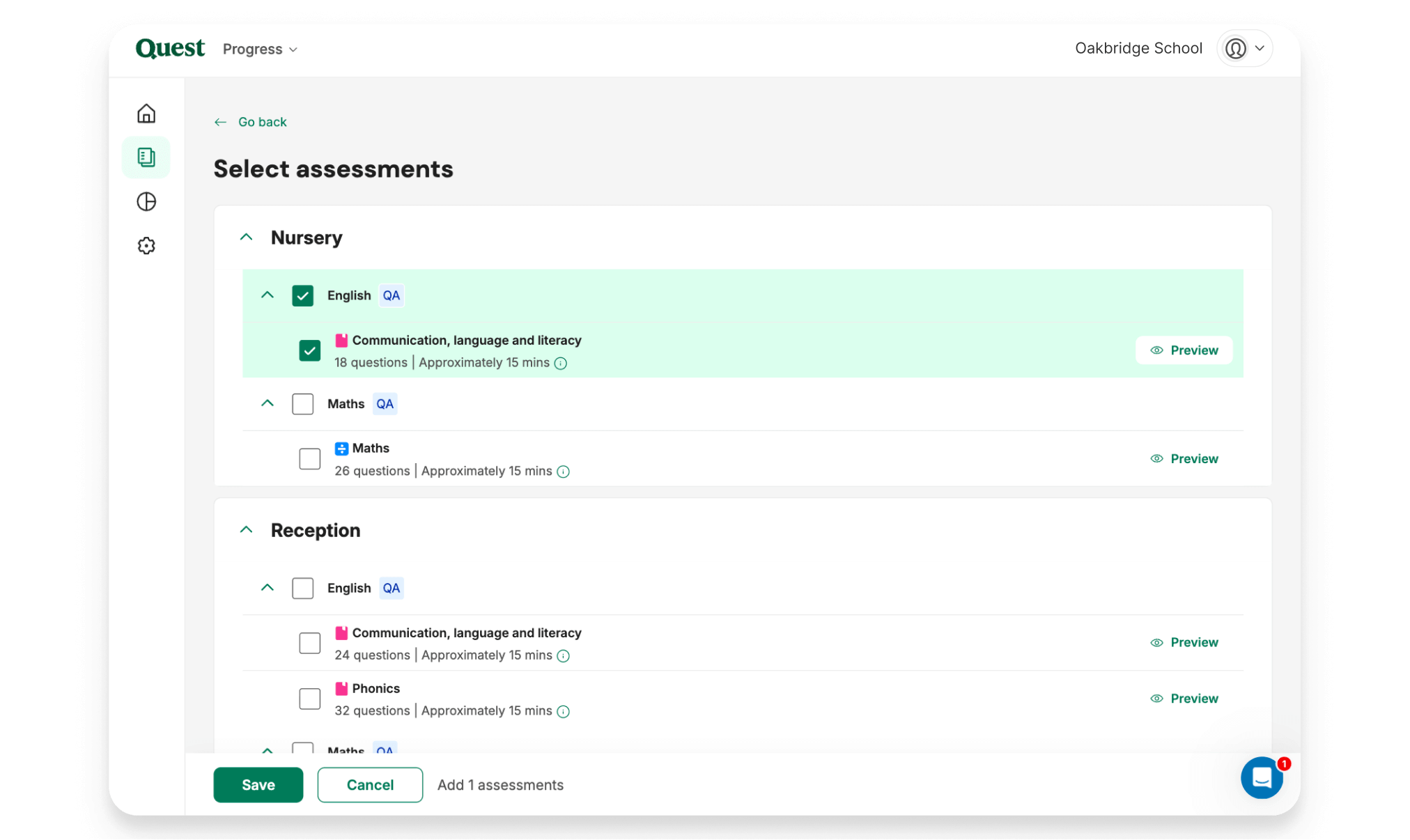
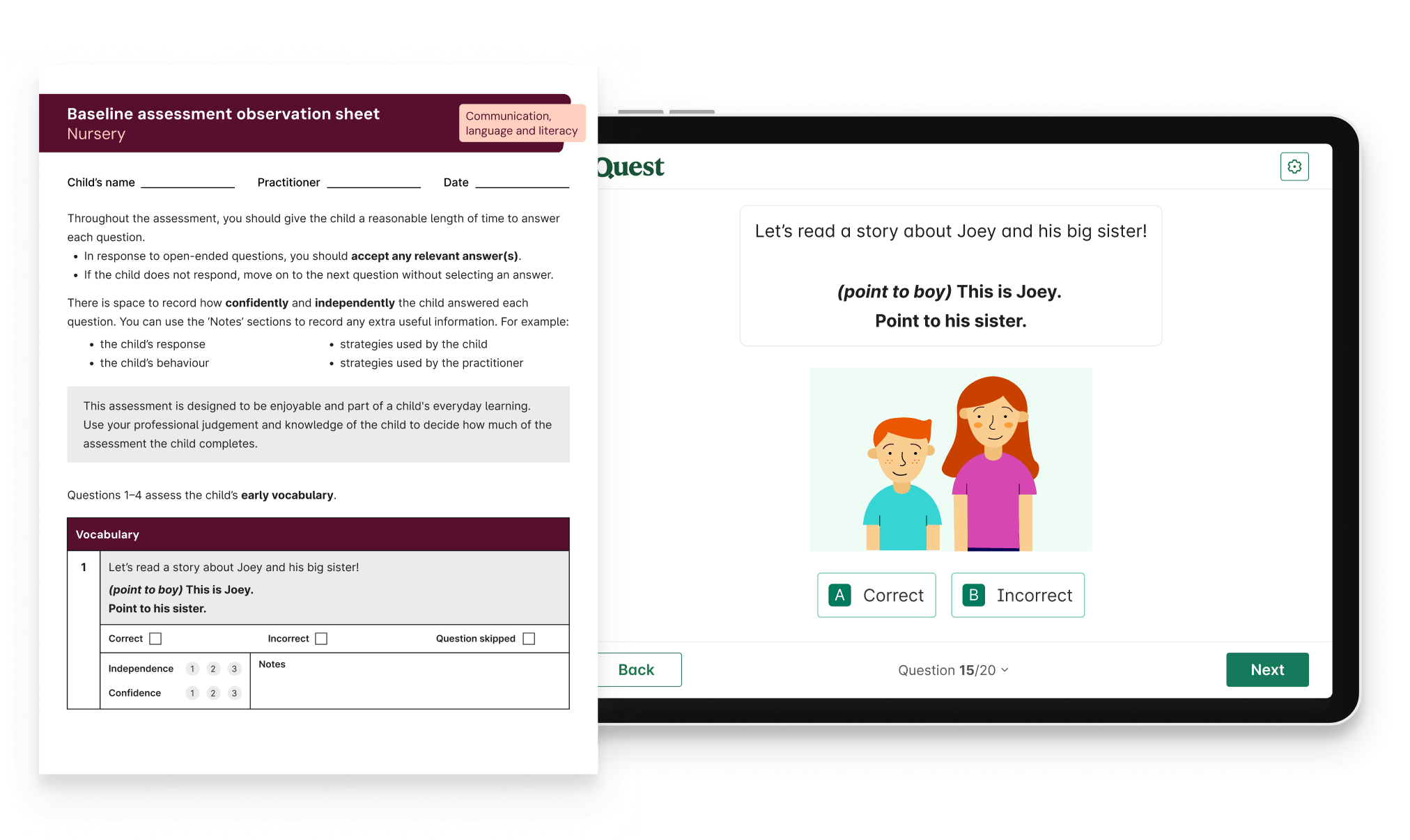
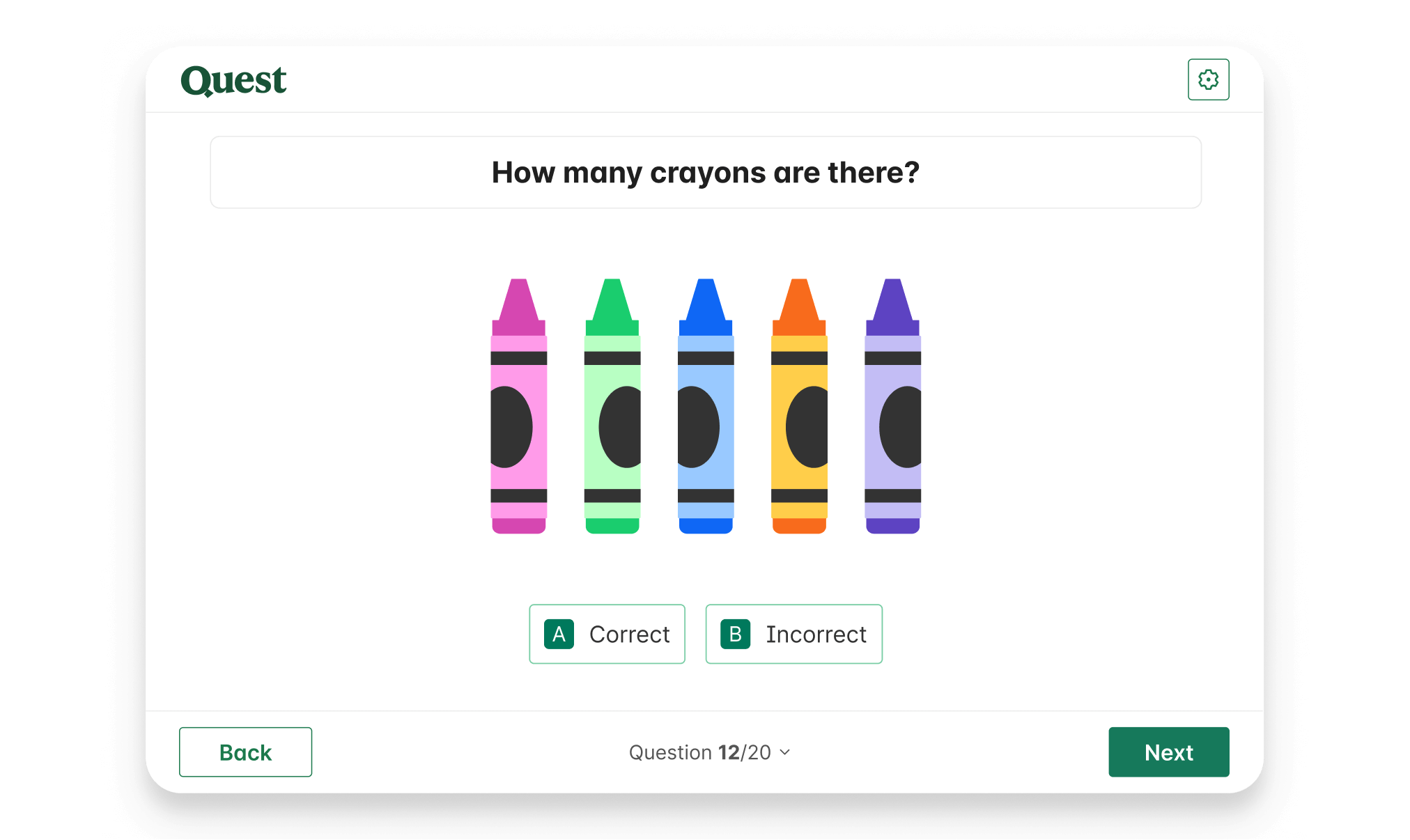
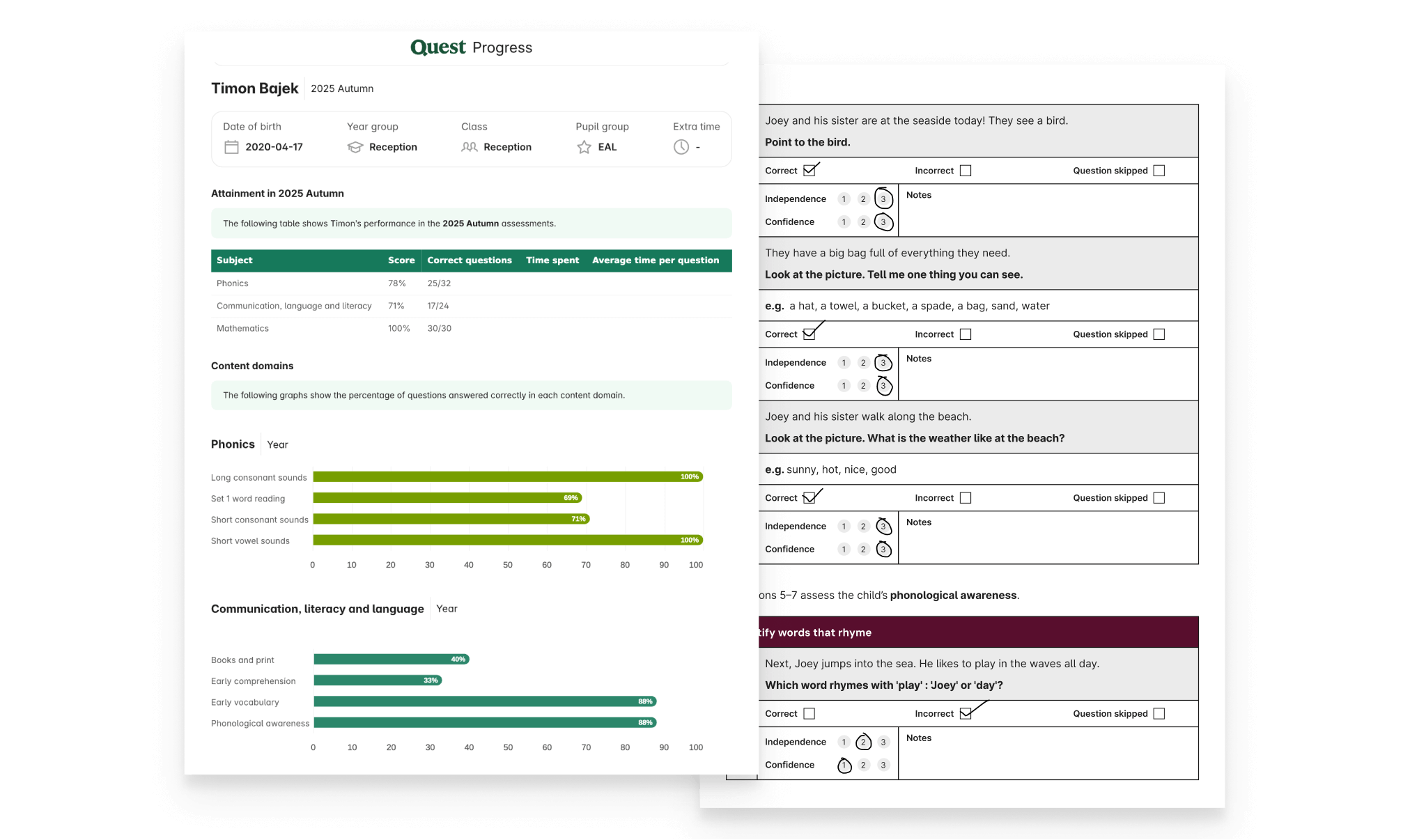
Aligned to Development Matters, our assessments give clear snapshots that enrich your ongoing observations in maths, communication, language and literacy.
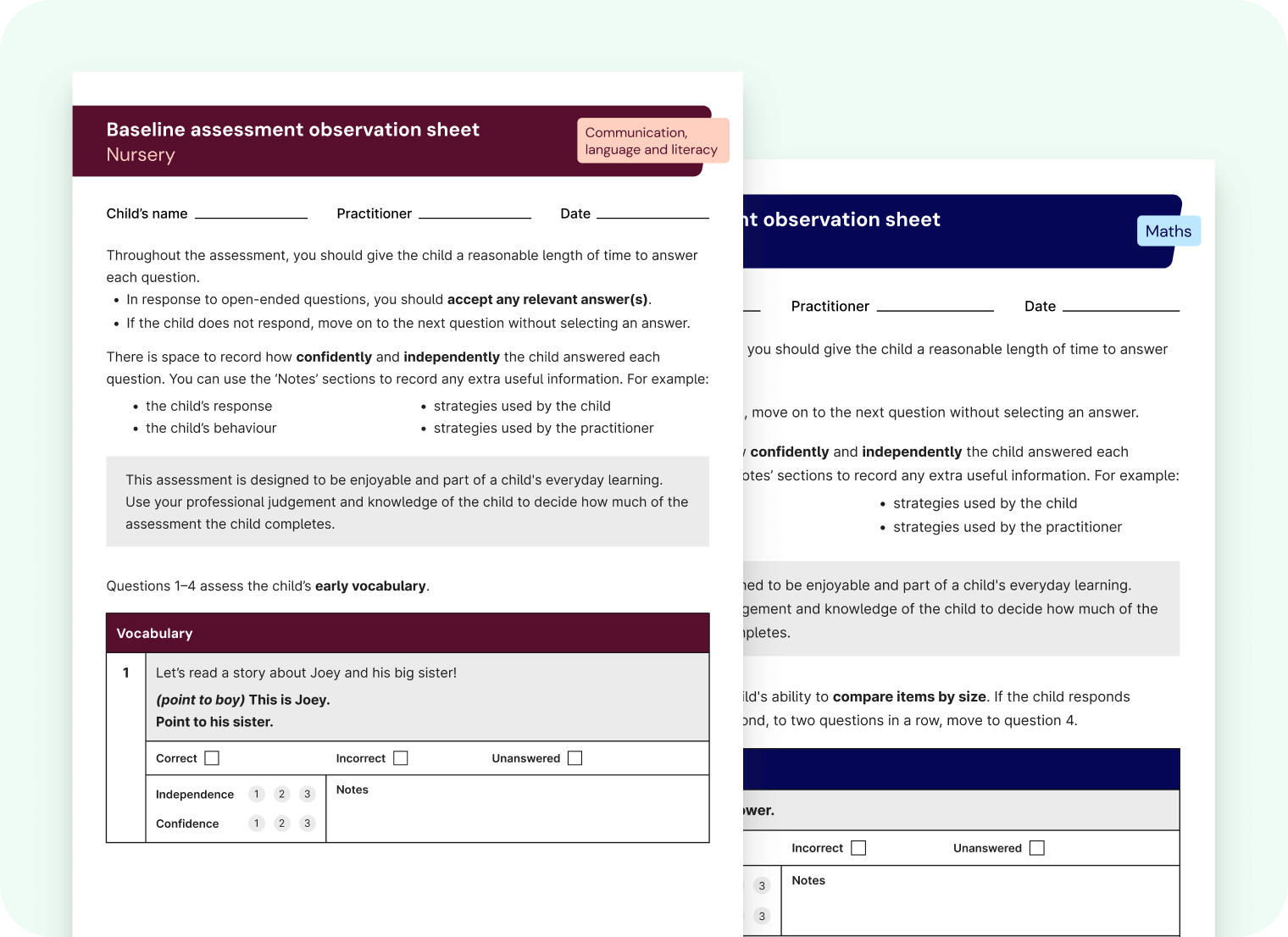

Every question reflects Development Matters guidance, helping you confidently track learning within a play-led approach.
Engaging, playful tasks that feel fun for children while giving you meaningful insights.
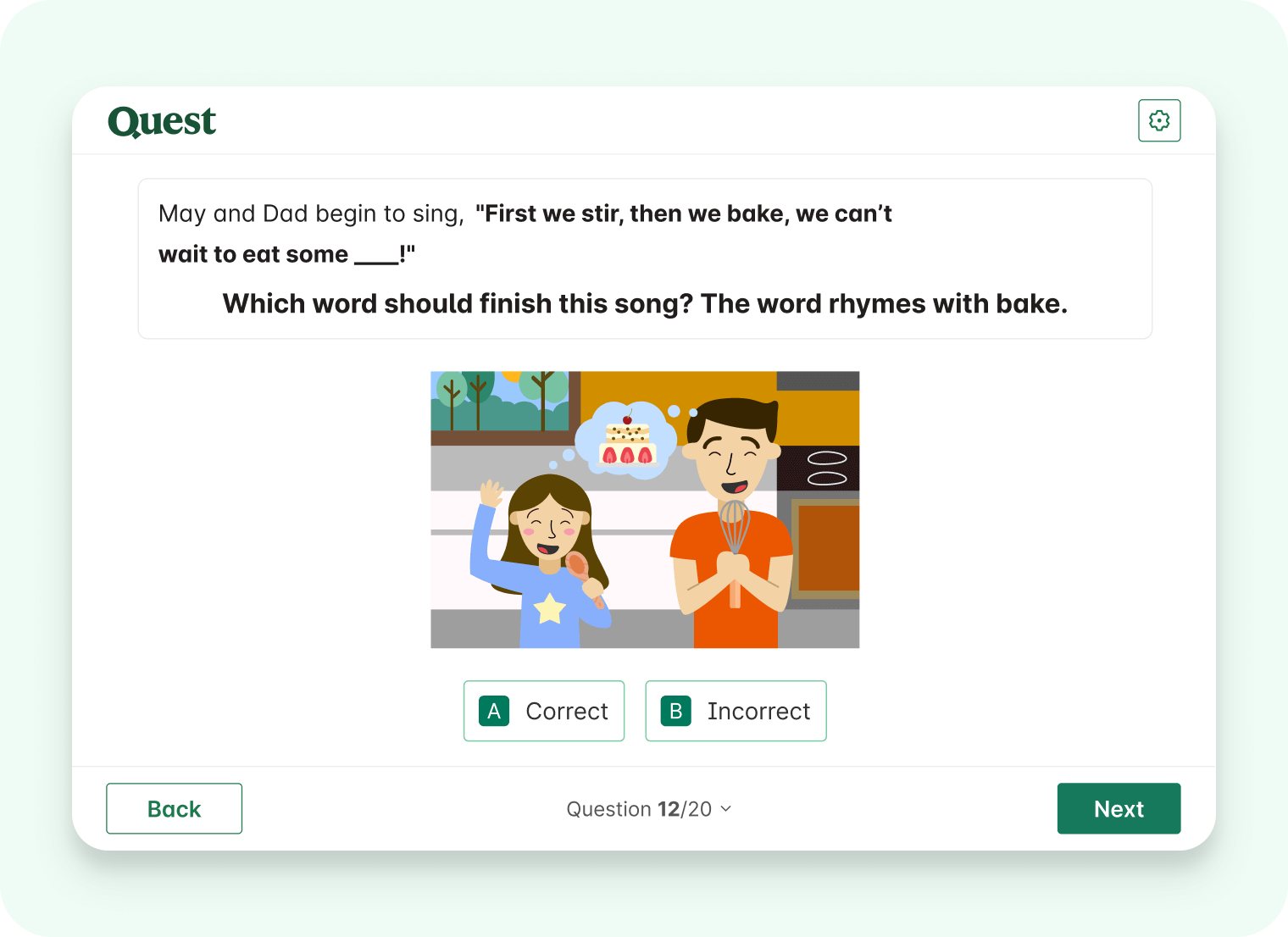
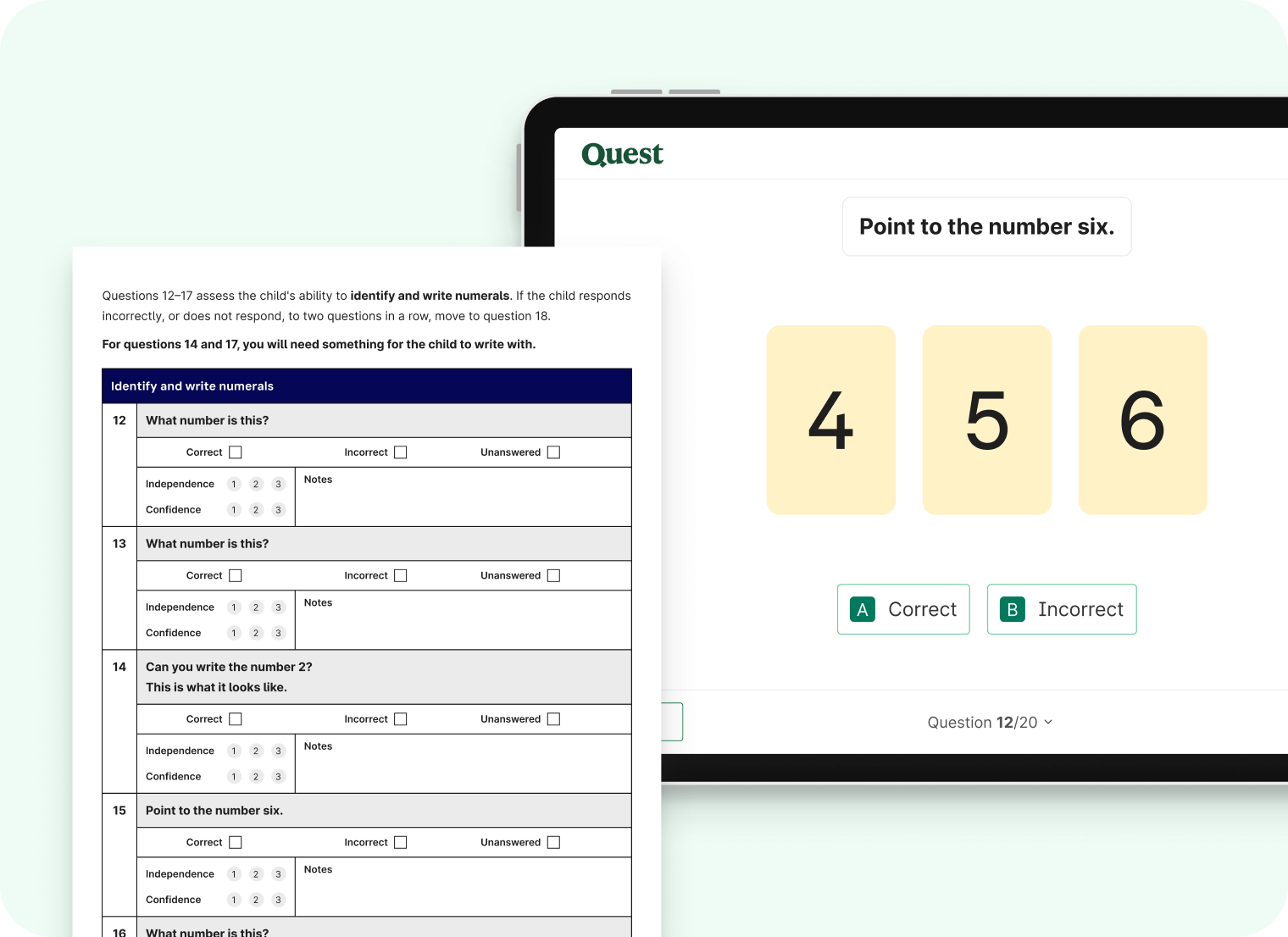
Simple online administration designed to save you time and seamlessly support your observation-led practice.
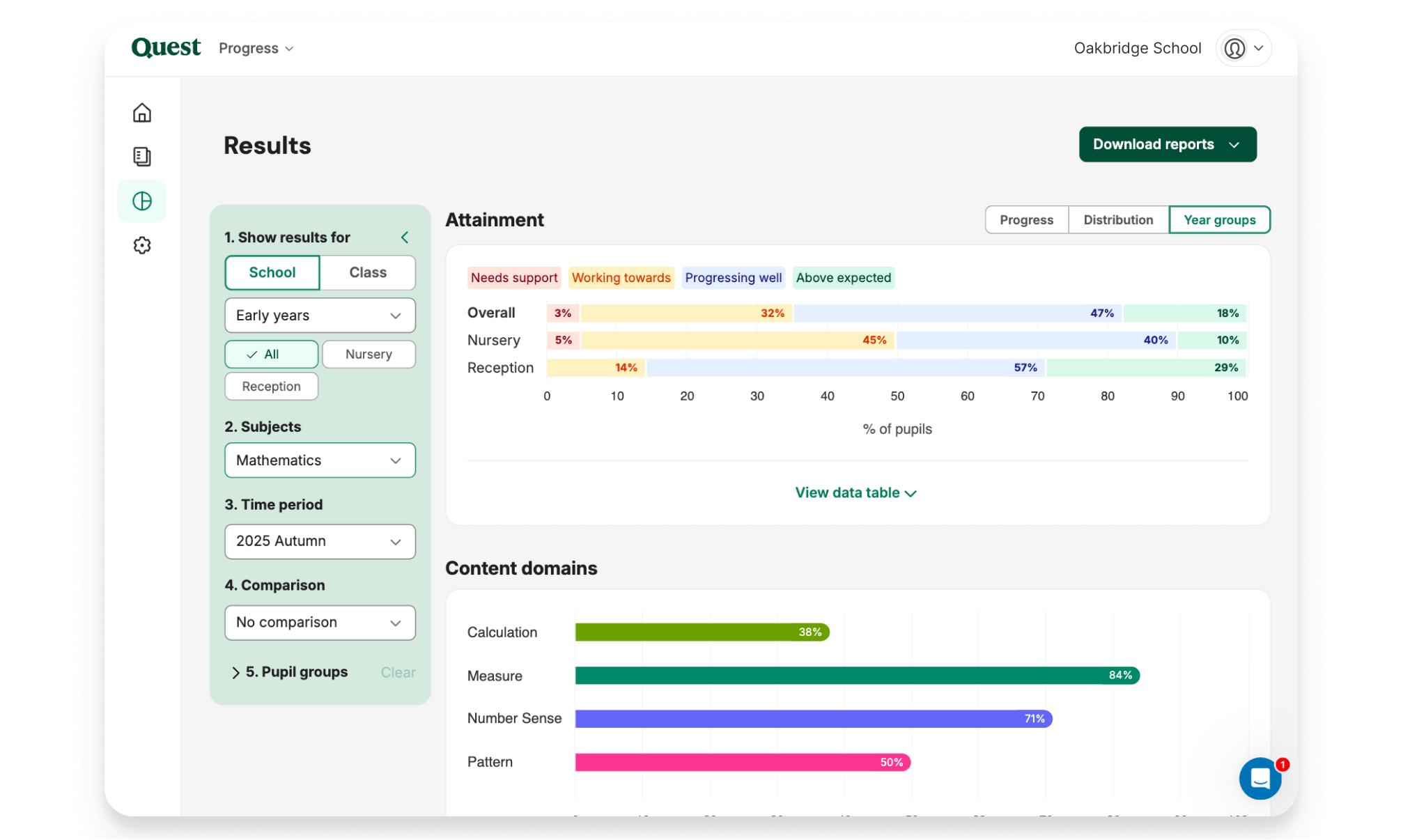
Immediate results that highlight children’s strengths, needs and next steps – ready to use the moment they finish.
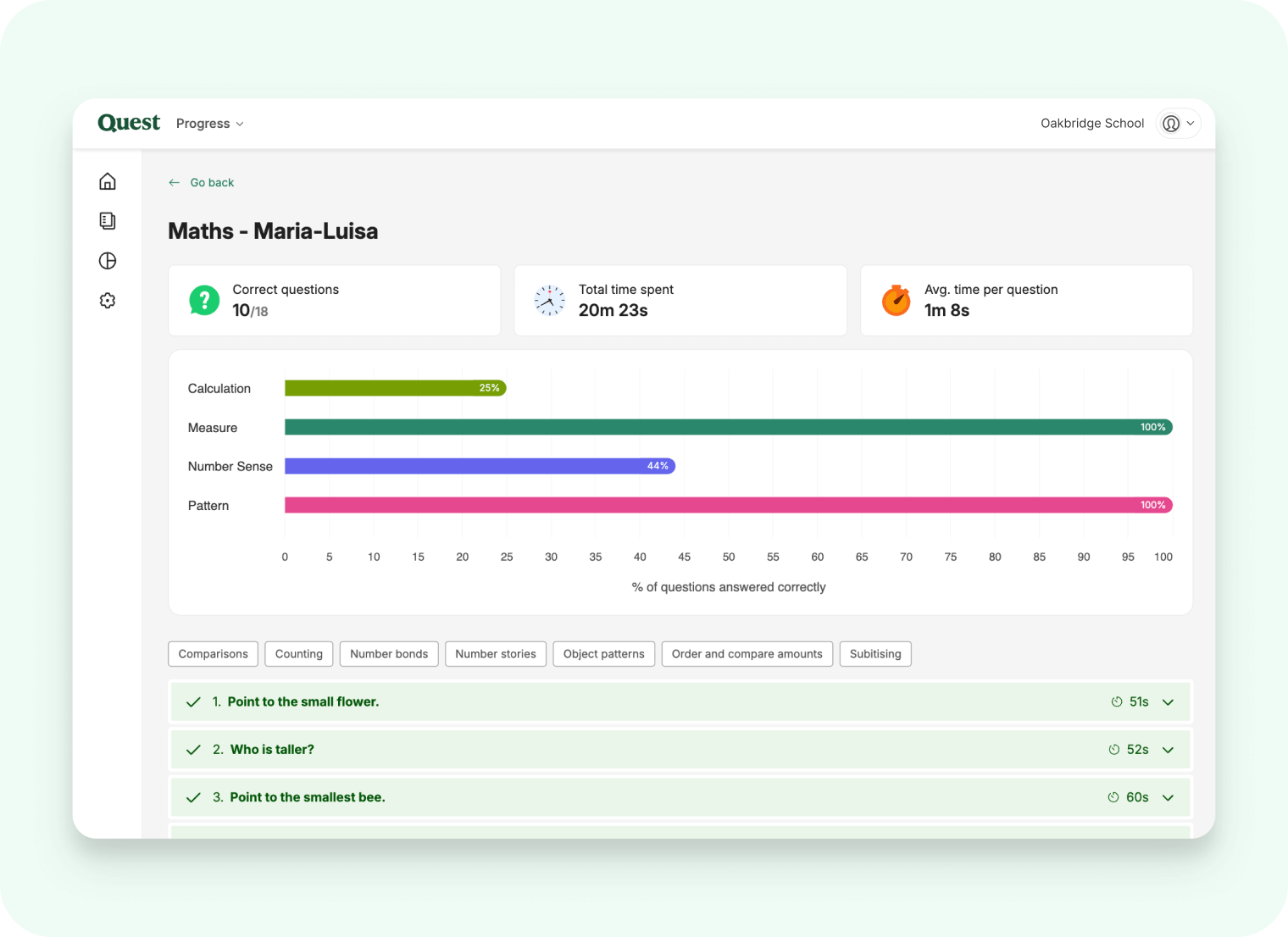
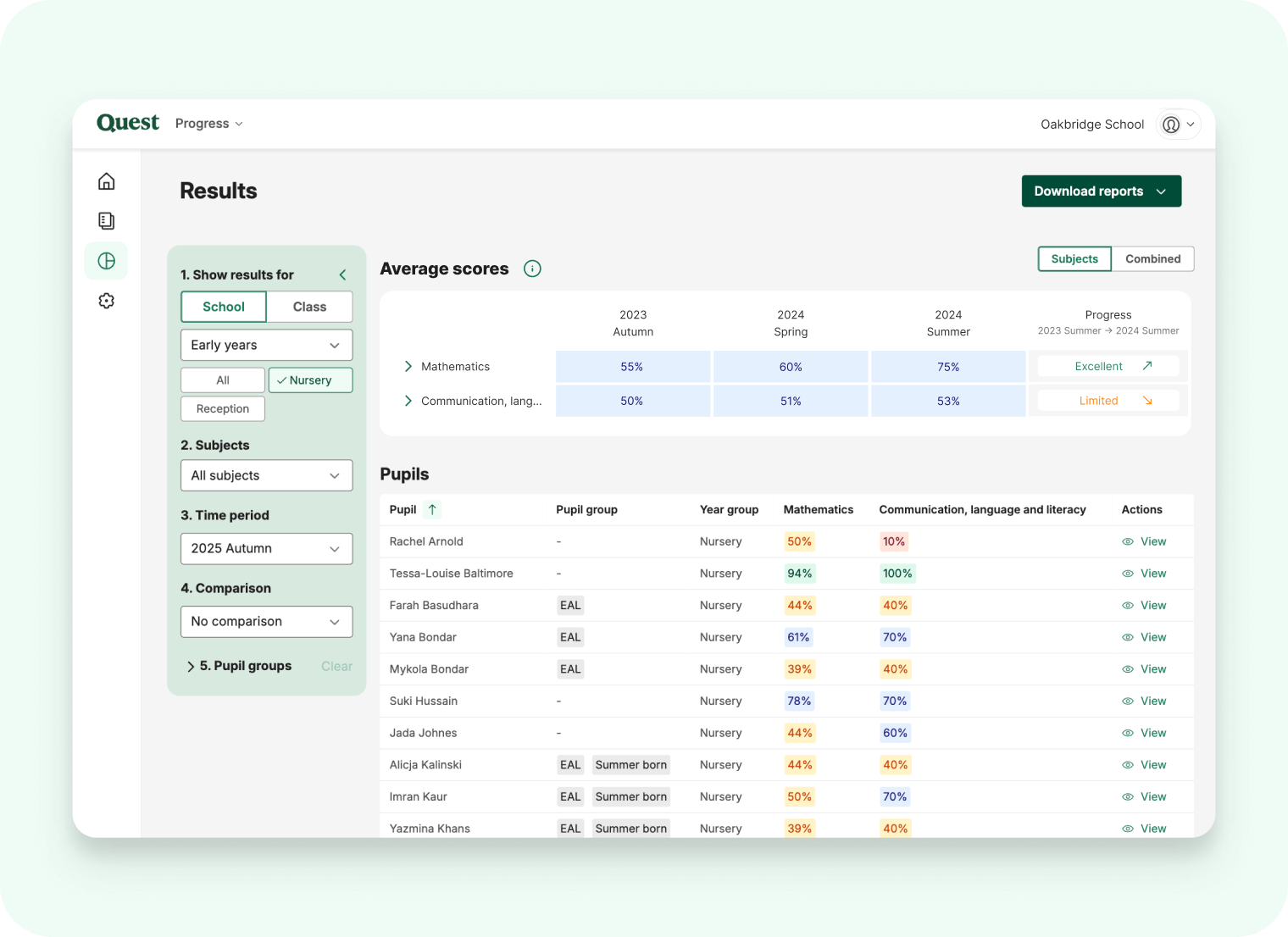
Clear, whole-group insights that help you spot emerging patterns and shape purposeful, responsive planning.

Quest assessments focus on two key areas of the EYFS: Mathematics and Communication, Language and Literacy (CLL).
They draw on statements from Development Matters and can also be mapped to Birth to Five Matters, ensuring alignment with the frameworks you already use.
Each assessment provides an objective snapshot of a child’s current attainment. This sits alongside your ongoing observational practice, helping you build a rounded, evidence-informed view of children’s learning.
Quest supports early language and literacy development by assessing:
These areas are central to children’s communication, early reading skills, and wider access to learning.
The Maths assessment focuses on essential early number and pattern concepts, including:
Together, these domains provide a clear picture of children’s early mathematical understanding and help identify next steps for learning.
Quest EYFS was co-designed with expert practitioners to offer more nuanced insight into early development. Instead of a binary “emerging/expected” model, we use a four-point scale: Needs support, Working towards, Progressing well, and Above expected.
This approach highlights key differences in progress—helping to tailor support or challenge where needed—without adding complexity. It supports gap analysis and next steps planning, while reinforcing that professional judgement and holistic understanding remain central.
Our EYFS bandings were developed through expert practitioner input and validated with data from over 30,000 pre-school and Reception children. Practitioners trialled the assessments in their settings, aligning expectations with the EYFS framework, and we refined the ranges based on this large-scale feedback.
Raw scores convert into percentage bands that reflect typical developmental progress:
These bandings are designed to guide next steps, not act as fixed academic thresholds. They support—rather than replace—professional judgement and sit alongside wider EYFS evidence. As we continue gathering data, we’ll keep refining these ranges to stay aligned with evolving practice.
Quest Phonics aligns with typical phonics progression seen across validated schemes, including Read Write Inc. Reception Autumn assessments focus on early phonics knowledge, including Set 1 sounds, with content increasing in complexity each term.
A detailed term-by-term progression map is available in our Phonics Practitioner Guidance in the Resource Centre.
The assessments follow the Read, Write Inc phonics progression:
Quest EYFS and KS1 serve different assessment purposes. Quest EYFS provides a developmental snapshot to complement observational assessment. Quest KS1 provides age-standardised data aligned to the National Curriculum.
Because the frameworks differ, a direct conversion from “Progressing well” in EYFS to “Meeting expectations” in KS1 is not meaningful or reliable.
The strongest transition picture combines:
This supports developmentally appropriate progression, rather than assuming a linear academic link across phases.
Assessments are spaced across the year to align with teaching progression and give a clear picture of development over time:
This structure supports timely gap analysis and planning for next steps at key points in the year.
Our focus this year is to gather structured feedback from EYFS practitioners across diverse settings to identify where Quest can add the greatest value next.
EYFS practice evolves through observation-led, child-centred development, and our roadmap will continue to reflect that. We welcome feedback on what works well and what you would like to see introduced next - your insight will directly shape our next steps.


